무역, 해외 시장 모니터링, 리서치 및 분석.

2020/09/22

Benjamin Graham, the father of value investor.

Benjamin Graham is considered as most successful investor of all time. Not only he had countless victories on the investment field but also was a father of so many successful investors like Warren Buffet, John Templeton, Irving Kahn and so on. The reason Benjamin Graham is regarded as historically greatest value investor can be found back in days in early 1900s when speculative trading environment was mainstream. Stock market was not kind of what we know now. During the days, investors were anxious of uncertainty since absence of internet provided insufficient information.

As Benjamin Graham was working in NHL, he had his heydays working on security analyst. He was not momentum or day-trader seeking for profit gains in short-term. His investment style is known as the “cigar-butt” which is the “approach that picks up discarded business cigar butts laying on the side of the road, selling them at deep discounts to book value with one good puff left in them.” Warren Buffett was influenced the way Benjamin Graham did in the past to find the firms that were barely out of attention from media.

By reading his book, I was inspired by several investment philosophy which lead present investors to direct themselves in the right path. I will list four principles Benjamin Graham emphasized.

Diversification

Portfolio divergence is the most important for not only for mom-and-pop investors but also the ones who regard themselves as gurus. Benjamin Graham has diversified his portfolio in many different areas. He mentioned finding companies which has significant ‘safety margin’ is the best way to make profit, however, it is not easy to discover such a stock. Some of firms which he regarded as underestimated compared to the present price were invested heavily and concentratively. However, for unknown situation, he invested in various companies to hedge the risk. He invested about 70 different companies to diversify his portfolio because if a company makes a loss, then others will cover it. (Warren Buffett was influenced by Benjamin Graham, though he did not select diversification investment method.)

Intrinsic Value (Cigar-Butts)

Sometimes inexperienced investors tend to follow the trend of stock market. If the market is in upward cycle, then they don’t try to miss out the chances. If opposite, then investors try to sell off their assets. That is what Mr. Market entices innocent investors to join the party. It can give them delusion as they are the successful investors when the market is irrational floated. However, it can lay investors into fury when they think they are deceived by Mr. Market. Sometimes the experts of analysts can allure them to lead market melt-up. Nevertheless, Benjamin Graham puts weight on intrinsic value. If an investor has a clear philosophy based on intrinsic value, there is no need to worry about in attributing his or her mistakes on personified object that does not exist at all. 

2020/09/21

Amazon is dominating the retail industry. "Death By Amazon"

Amazon is expanding beyond online and offline to distribute its power through all areas. The company’s widespread expansion in the industry is giving a threat to the offline stores and small and medium-sized shopping malls into bankruptcy. The book “Death by Amazon” introduces “Amazon fear index”, which represents the stock indices of 54 publicly traded companies that are at risk from the Amazon’s business. 


This book explains specifically about how Amazon is increasing its field whether by itself or acquisition. To fight against Amazon’s monopoly, the book reveals the tactics of each company for its survival. Companies such as Walmart, Costco, Wayfair, Nike, Spehora, Warby Parker, Allbirds, Quip, Uniqlo, have mobilized their own strengths to compete against Amazon by their own advanced technology and differentiation strategy.

Internet of Things (IoT) or technology represented as 4th industrial revolution, such as big data, virtual reality, augmented reality, and so on are gradually permeating every aspect of our daily lives. Just only five years ago, many did not imagine a store where customers just need to take things out without any checkout, an artificial intelligence secretary who can request anything with a single word, and a delivery service for drones or unmanned self-driving robots. However, cutting-edge technologies that seemed like a distant future are now beginning to be naturally commercialized. The lead of industrial technology change is dominated by Amazon, the world's largest online e-commerce company. 

Amazon, which is considered as an omnivorous dinosaur, has destroyed the existing industrial ecosystem by making strides in every business from online bookstores to fashion, furniture, drones, robots, and cloud services. In the process, Amazon fears have gripped the market, with a series of offline giants collapsing, including large bookstore chain "Barns & Noble," the world's No. 1 toy company "Toys R Us," and 100 years of traditional department store "Sears." It has come as a huge threat to countless companies to the point. 


On the other hand, there are companies that are steadily increasing their sales by solidifying their territory in the strike of Amazon. From big offline retailers such as Costco, Walmart, Uniqlo, Tiffany to small and medium online shopping malls including Etsy, Wayfair, Casper, what are their strategies that have won the competition against Amazon? Commonly, they have avoided direct challenges against Amazon and tried to differentiate themselves by showing their strengths.

For example, fast fashion brand Uniqlo has launched a customer-centered service that combines cutting-edge technology based on the offline stores world-wide. Also, the world's largest handmade online store, Etsy has survived throughout the pressure of Amazon’s enlargement. Amazon's business strategy is mainly to buy products in large quantities from suppliers and offer them at low prices, which have not worked at all in the handmade market where diversity and uniqueness are important. Soon after, Amazon launched a competitive service called ‘Handmade at Amazon’ to take advantage of the market, nonetheless Etsy still remains the leading player. The book explains fully about the secrets of future strategies of each companies in response of Amazon’s strike. It also revealed Amazon's innermost agony behind its aggressive entry into the market. 

This book consists of a total of seven chapters. First and second chapters are about the steps which Amazon dominated online retail market. Then, Amazon Go was next Amazon’s step to stride in the offline markets: for instance, fashion and furniture industries, which were considered difficult to succeed in online. What's the real story behind Amazon's relentless move across the field? From chapter three to six, the book deals with the events of offline giants such as Walmart, Costco, and Apple. They are fiercely fighting with Amazon to defend their territory with strong brand strategies and smart, high-tech tools. Finally, Chapter 7 reveals the strategies and examples of companies in fighting with Amazon.

The author of the book, Shirota Makoto, is one of the top economist in Nomura Institute. He has been watching the moves of Amazon and the rest of online and offline retail commerce companies. It was clearly witnessed that Amazon was destroying the existing ecosystems. A lot of companies which did not prepare from their competitors later faced bankruptcy. On the other hand, some companies were able to handle themselves from the crisis of so called ‘Amazon Fear’. It is difficult to predict who will be the champion in retail area, however, in order to maintain in survival, overcoming Amazon’s dominance is one of the strategies that companies should bear in mind.

2020/09/20

Sony is about to launch PlayStation 5....competing with Microsoft and Nintendo.

The new console competition between Microsoft (MS) and Sony has risen. The two companies began a scuffle for control of the huge console game market as they began pre-booking for new consoles. Microsoft and Sony will release their new consoles Xbox series X and PlayStation 5 on November 10 and 12. It is the first time in seven years that the two companies are releasing new consoles, PlayStation 4 and Xbox One.


The previous models, PlayStation 4 and Xbox One, saw their performance increase fall short of expectations. However, the newly introduced PlayStation 5 and Xbox series X are considered to have improved performance enough to enjoy smooth games even at 4K resolution.

In addition, Sony, which has adopted a strategy of attracting the attention of console users as a traditional way to strengthen its exclusive lineup.  Meanwhile Microsoft is putting strength on console rental service called Xbox All Access, along with subscription game service, GamePass. The competition between two companies are now heating for its market.

Normally, pre-booking serves as a barometer to determine the market's interest in the product before launch. This is also why all companies, regardless of sector, make great efforts to supply and demand pre-bookings, sales outlets and supplies.

Sony began pre-booking PlayStation 5 on the 18th for global primary retailers such as Korea, the U.S., Japan, and Europe. The game industry also commented that Sony, which was slightly behind Microsoft's schedule for price and pre-booking, has started to take the lead by making reservations faster than expected.

The pre-booking of PlayStation 5 was conducted in a hotter atmosphere than expected. In all countries where reservations have been made, supplies have run out while reservations have been made. As soon as pre-booking began in Korea, pre-bookings were sold out, and console users could see how much interest they had in PlayStation 5.


Source WSJ


2020/09/19

Stock market seems decoupled with economy: 5 reasons to explain.

Worldwide pandemic strike has later resulted asset market melt-down. The factories in China had labor shortages which reduced global supplies. After the COVID-19 punched American and European countries, the biggest shutdown or so called 'Great Lockdown' in world history, their demand has shrank extraordinarily enough to slow down international trade. The fear of loss of demand and supply would bring to the exacerbation of world economy and the stock responded accordingly. The coronavirus recession, which seemed like a bear market rally, has led to investor disposition effect. Margin calls negatively granted fear to investors to sell off their assets. 

However, the asset market such as stocks, bonds, and commodities, and so on started to revive while the fundamentals were still low. The media has attracted attention to the stock market in which mom-and-pop investors could have opportunity to buy the stocks cheaply from the lessons of dot-com bubble and great recession in 2008. The sensation so called 'FOMO (fear of missing out)' triggered melt-up markets. See my blog https://techongstudy.blogspot.com/2020/08/fomo-fear-of-missing-out.html

However, why does this phenomenon happen? What made the ‘fear of having asset’ to ‘fear of missing out’? Why are there so many day-traders (or sometimes called momentum traders) who think they can beat the stock market?

1. There is no alternatives (TINA)

The great shutdown has halted sports games to prevent people from mass gatherings. Sports association did not intend to cease but to sustain the games without crowds. However, as sports stars were exposed to the disease, the games were more than a month delayed. Quarantining at home as lockdowns continues, gamblers were seeking for attractive and thrilling bets. Dave Portnoy was at the lead, showing off his gains through selling and buying stocks. Robinhood investors were deceived by ‘mister market’ (which Benjamin Graham introduced) and started their speculative activities. The liquidity from sports gamble to the stock market has moved the index upwards. 


2. Signals for economic recovery

Crowds believed that the worst has passed. As stock market index is a leading indicator to the economy, multitudes assumed in a strong bounce back. More positive news on real economy such as PMI or unemployment rates are alluring mom-and-pop investors to the market. Anticipation on corporate earnings recuperation can be a strong reason for holding the shares in case of rising in the future. “If the economy continues its recovery and real GDP growth is anywhere close to the current consensus view, the stock-market bull may just be getting warmed up”, says Jim Paulsen, chief investment strategist at Leuthold (WSJ). 

3. Monetary Policy

Federal Reserve and U.S Treasury have been responding to the pandemic crises more rapidly than the previous catastrophes such as financial crisis in 2008 or great depression in 1929. Fed has cut its federal funds rate to near-zero and reported its lending powers by financing into special purpose vehicle (SPV) leading market reflation. Low interest rate is good for ‘gold-and-silver class’ wealthy people since they borrow money at discounted price and invest on asset markets to seek for more wealth. According to the Federal Reserve about top 10% of wealthy Americans owned 87% of all stock in the first quarter. Also, the banks seem to lend cash in accordance with reliability and ability to pay back. Moreover, low interest rate results in low real yield of treasury bills, notes, and bonds (regarding inflation), which would boost asset market such as stocks and gold to benefit more gains. See my blog: 

https://techongstudy.blogspot.com/2020/09/real-yield-is-reason-for-market-mover.html. 

However, this does not only apply to Fed but also to Bank of Japan, European Central Bank, and the banks all over the world. BOJ and ECB both revealed to give incentives to the commercial banks whenever their lending activities to the firms outperforms. Programs such as SLF, PEPP, TLTRO III were announced to bring the stability of their asset market.


4. Fiscal Policy

U.S. Department of Treasury has announced fiscal policy, CARES Act, which “provides fast and direct economic assistance for American workers and families, small businesses, and preserves jobs for American industries.” This includes PMCCF or SMCCF, MNLF, etc. Companies such as YRC, MCH, and Juniata received bailouts of loans from government. Lending programs such as 150 million stimulus package and payroll protection program were also revealed by U.S. Treasury, helping for firms to maintain employments or furloughed ones. HEALS (Health, Economic Assistance, Liability Protection and Schools) Act was additionally mentioned. These are later having ‘announcement effect’, which means Fed's bond-buying program (CCF) has affected investors’ psychology to buy the assets believing lending program will help them buying later according to New York Fed’s report ‘It’s What You Say and What You Buy : A Holistic Evaluation of the Corporate Credit Facilities’. “The effect of the programmes is more psychological than financial... The Fed has totally achieved their target.” 

5. Dominance of Tech Giants

The out-performance of the tech giants laid the disparity between the stock market winners and losers. The gap between them has resulted inequality in the market; companies which concentrate on contactless business such as Paypal, Shopify or Zoom had best performances during the pandemic since many people were staying at home. However, energy, financials, utilities, real-estate and industrial segments were still in the red. Most of tech giants have market capital dominance, which makes stock markets such as Nasdaq and S&P 500 moving upwards since the index is calculated in weighting method, giving a higher percentage allocation to companies with the largest market capitalization. Big market capitalization is dominated by companies with contactless business tools which makes stock market inflated.


Source

https://www.visualcapitalist.com/how-big-tech-makes-their-billions-2020/

https://research.stlouisfed.org/publications/economic-synopses/2020/04/21/central-bank-responses-to-covid-19

https://www.wsj.com/articles/why-did-stock-markets-rebound-from-covid-in-record-time-here-are-five-reasons-11600182704

https://www.wsj.com/articles/should-you-buy-stocks-because-interest-rates-are-low-11600263713

https://www.wsj.com/articles/when-the-stock-market-and-economy-seem-disconnected-11598002220

https://www.wsj.com/articles/this-market-is-a-tech-market-if-bond-yields-rise-watch-out-11598101689

https://www.marketwatch.com/story/robert-shiller-explains-the-pandemic-stock-market-and-why-its-decoupled-from-the-economy-2020-07-07

2020/09/15

What makes oil prices volatile? History explains.

Crude oil prices had many rise and fall in history. After crude oil attracted media attention in the 1850s, the price now has been lower than the average price. Energy and petroleum expert, Daniel Yegin indicated that crude oil could be the most popular speculative option for investors to bet against the volatility. 

Rise of Crude Oil

Crude oil was the first discovered by Edwin Drake and was industrialized by John D. Rockfeller. The oil started to be used in many different areas. By 1890, Standard Oil Co. controlled almost 88 percent of the refined oil flows in United States which triggered to face antitrust legislation that restricted the market monopoly. In March of 1908, geologist George Bernad Reynolds started to explore other than U.S. and founded out the possibility the oil could be discovered in Persian area (which is now considered Iran). 

As crude oil production places increased, the supply of crude oil also surged. According to the law of supply and demand, demand remains the same, but when supply increases, prices go down.

Automobile

Oil prices, which had been cut in half due to increased supply in oil, doubled again in around 1910. This is the time when Henry Ford installed first moving assembly line for the mass production by applying the conveyor belt system to the automobile plant. The innovation contributed automobiles to be widely popularized. Demand for crude oil soared as demand in automobile fueled.

WWI and Great Depression

However and the supply of crude oil became unstable due to World War I, which pushed the oil price higher. With the onset of the Great Depression, oil prices fell again due to the loss of demand and more countries started to extract more oil. In the early days of oil market, short-term prices were determined by supply and demand, and in a longer-term, the rise of crude oil supply made the prices fall gradually and steadily. 

Aramco and OPEC

However, things got different after significant amount of oil was discovered on March 4, 1938. The name Aramco (short meaning of Arabian American Oil Company) started to be famous in the beginning of 1944 and the company reached the milestone of supplying 500,000 barrels a day in 1949 and later, one million barrels a day in 1953. As Aramco had a domination of global oil market in 1960 which later came up with foundation of Organization of Petroleum Exporting Countries. OPEC’s objective of formation is “to co-ordinate and unify petroleum policies among Member Countries, in order to secure fair and stable prices for petroleum producers.” 

Wars in Middle East

However, political issues happened in 1970s. In 1973, oil-producing Arab nations cut off supply of crude oil to U.S in retaliation for supporting Israel in the Yom Kippur War ($24  $56). In 1979, Iranian revolution resulted in sharp drop in oil production which lifted oil price from $56 to $125. After that President Reagan controlled the price of oil to $26 from $113 in 1986 by abolishing last price controls on U.S. produced oil. Gulf War lifted $34 to $77 in August 1990 when Iraq invaded Kuwait. Later the price fell back to $37 after U.S. military success in removing Iraqi forces that Saddam Hussein regulated. 

Expansion of Emerging Market

From 2004 to 2007, oil prices continue to rise and reach $74 because emerging economies such as China, India, and Southeast Asia spurred industrialization, resulting in enormous energy demand, while the supply remained stable. It was because oil-producing countries did not increase production to have more gains by benefiting high oil price. 

Great Recession

However, in 2007 and 2008, series of event such as Venezula cutting oil production to Exxon Mobile, slow recovery of Iraq’s export on oil, labor strikes in Nigeria and the U.K.’s North Sea oil fields, and Mexico’s decline in oil. The price of oil reach in $118 in December 2007, and peaks $165 in mid 2008s. However, after weak demand of oil during great recession caused by financial crisis, the price sank till $50s. 

Shale Revolution

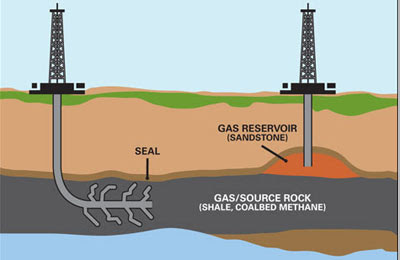
Recovery from global economic crisis made oil price rebound to nearly $95 until huge increase in shale gas production. The revolution of fracking the oil led oil price plummet in 2015. It was a strategy to increase the market share in the long run, bearing short term low oil price. Afterwards, OPEC reduced production again until 2018, and oil prices recovered.

COVID-19

In April of this year, Western Texas Oil's May futures price hit an unprecedented oil price of negative $37.63. It means that the future price (May) for crude oil has fallen to negative as of April. The price of crude oil was too low that the seller had to give more premium to the buyer. The demand for crude oil dropped sharply as COVID-19 spreads globally. Shutdown of factories and lockdown sharply reduced oil but supply remained the same, creating a huge gap between supply and demand. This situation is regarded as contango where future price of commodity is higher than the sport price. (Backwardation has opposite meaning)

Warehouses that handle oil inventory were insufficient, which increased more on storage fees. However oil producing countries did not reduce production. (China used it as chance to buy crude oil cheaply) OPEC+, a group of oil producing countries no matter they are in OPEC or not, failed to reach an agreement to reduce production. Rather than cutting production, Saudi Arabia and Russia increased their production, and the rest of the countries were also struggling to increase their production, which made refinery companies in danger. 

If the price of crude oil went down too much, it would be a big problem for each countries. In particular, Russia was worried American shale oil would take over market share. Afterwards, with the agreement to cut production gradually, the oil price slowly recovered. However, anxiety still remains since oil cut tapering puts pressure on OPEC+’s economy such as unemployment and GDP. 

Summary

Oil prices move according to supply and demand in this way and it is also closely related to international political abuse. 

• Increase in oil-producing countries

• Significant increase or decrease in demand for external reasons such as political and economical issue.

• Rise of industries that replace crude oil such as shale gas

Future

The shifting to the energy industry also has an impact on crude oil market in the future. Alternative energies such as solar power, electrical energy, hydrogen fuel, and nuclear power, are threatening the crude oil market. Will they change the frame? Well nobody knows for sure, but decline in need for crude oil is now on process.


Source

https://www.wsj.com/articles/oil-prices-drop-on-faltering-recovery-in-demand-11599562101

https://www.investopedia.com/history-of-oil-prices-4842834

https://courses.lumenlearning.com/suny-hccc-worldhistory2/chapter/the-discovery-of-oil-in-the-middle-east/

https://www.businessinsider.com/the-history-of-saudi-aramco-timeline-2017-11#aramco-gradually-increased-its-production-throughout-the-course-of-the-1940s-reaching-the-milestone-of-500000-barrels-per-day-in-1949-11